

Sound and Picture Built Into the Room
Audio visual installation in Tarzana for living rooms, media rooms and open-plan spaces where displays and speakers must integrate with existing finishes
Displays mounted without concealed cabling, speakers placed without regard for room geometry, and source equipment stacked visibly on shelving—these are the outcomes of audio visual installation treated as product delivery rather than system design. Foremost Automation approaches the work differently, designing and installing audio visual systems for homes and businesses in Tarzana so that every component—display, speakers, sources and controls—is specified and wired to function as a single system within the room's existing architecture. Residential and commercial projects are handled by the same team.
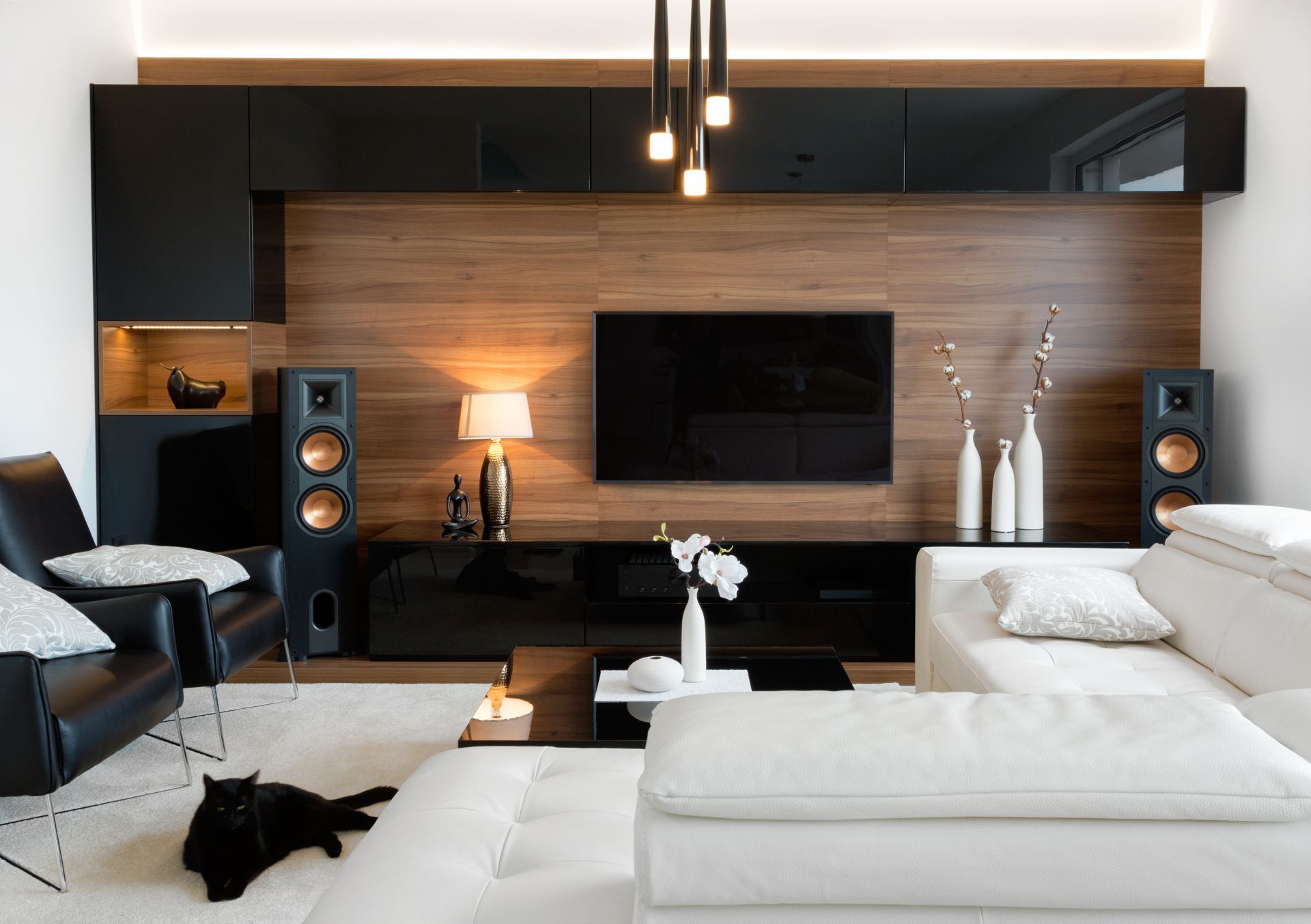
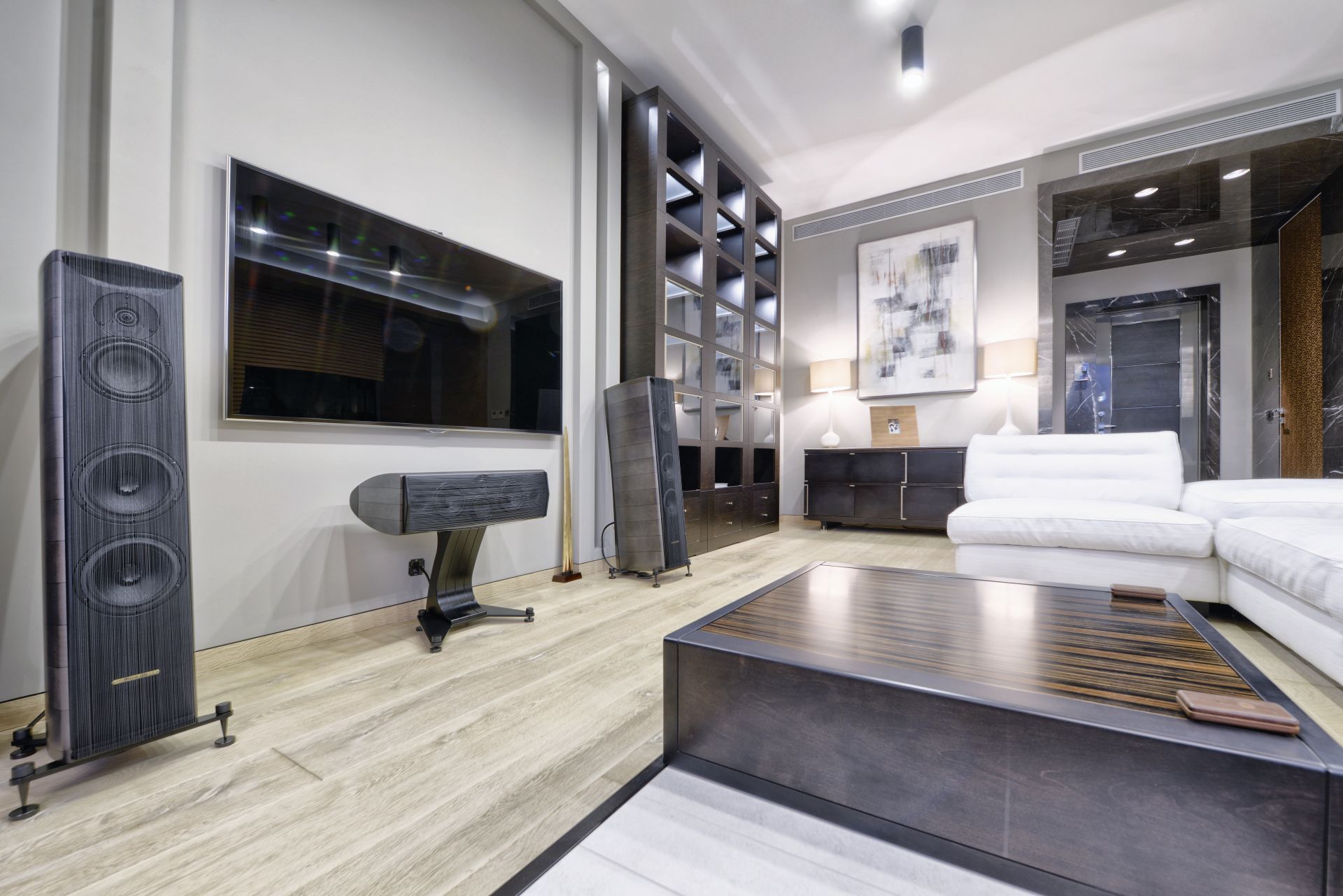
Installation begins with a site visit to plan display placement, speaker layout and source equipment positioning before any hardware is ordered or mounted. Open-plan living spaces and media rooms in Valley and Westside homes present specific integration challenges: cathedral ceilings, hard floor surfaces and large glass expanses all affect how sound distributes through the room, which means speaker selection and placement need to account for those surfaces rather than follow a generic layout. Cabling is run and concealed during installation, and the system is calibrated after all components are in place so that sound and picture are tuned to the actual room rather than factory defaults.
Arrange a site visit with Foremost Automation to map display placement and speaker positioning for your specific space before any equipment is selected.
How Audio Visual Integration Addresses Room-Specific Conditions
The calibration phase is where room-specific conditions are addressed directly. Speaker output levels, crossover points and delay settings are adjusted so that dialogue, music and effects balance correctly at the seating position—not just at the equipment rack. Display calibration covers brightness, color temperature and input latency so that picture quality reflects the content rather than the panel's out-of-box settings. These steps are completed after installation, not before.
After Foremost Automation completes the installation and calibration, the visible change is clean: no surface-run cabling, components housed out of sight, and a control interface that operates the full system from a single point. Rooms that previously required separate remotes or multiple inputs for different functions operate through one control layer. The display and audio work together as the room's content system rather than as independent products.
Commercial installations—conference rooms, showrooms, waiting areas—follow the same design-first process but account for different usage patterns: multiple simultaneous inputs, presentation switching, distributed audio to separate zones and integration with room scheduling systems where applicable. The scope of any project is determined during the initial site visit based on the room's construction, the intended use and the source equipment in play.
What Property Owners Ask About the Work
These questions cover how audio visual installation is planned, executed and evaluated, particularly for homes and businesses where the system needs to work within finished rooms and existing architecture.
What is planned during the site visit before installation begins?
Display height and viewing angle, speaker placement relative to seating and room boundaries, cabling paths through walls and ceilings, and source equipment location are all mapped before any hardware is ordered or mounted—decisions made at this stage determine whether the finished system is cleanly integrated or visibly patched together.
How does room geometry affect speaker placement in an open-plan home?
Hard surfaces, high ceilings and open floor plans cause sound to reflect and distribute unevenly, so speaker positioning and output settings must account for those surfaces rather than following standard spacing guidelines designed for enclosed rectangular rooms.
Why is system calibration performed after installation rather than before?
Calibration adjusts output levels, speaker timing and display settings to the actual acoustic and lighting conditions of the installed room—those conditions do not exist until all components are mounted and the room is in its finished state.
What should concealed cabling actually look like when the job is done?
No cable should be visible at the wall, ceiling or equipment location; all runs should terminate at wall plates, in-ceiling speakers or equipment enclosures, with no surface conduit, tape or exposed wiring at connection points.
How does the control layer tie the system together in a room with multiple input sources?
A properly configured control system switches between inputs—streaming devices, cable, game consoles, presentation sources—through a single interface without requiring the display or amplifier to be manually reconfigured for each source.
Foremost Automation also installs audio visual systems in Burbank, Glendale, Pasadena, Santa Monica and Thousand Oaks. To move forward with a room assessment and system plan, call Foremost Automation at (818) 660-5580 to set up a site visit.